As a freshman, picking my classes for my first semester was something I spent a lot of time thinking about. However, when I learned about this class, I immediately knew that I wanted to take it, or more accurately, needed to take it. The class is called English for the Social Sciences, and since my major is sociology, it only made sense to take a course that would directly support my field of study. I originally assumed the class would focus mainly on basic writing skills for social science majors. I did not expect it to be as intricate or demanding as it turned out to be. I had no idea how much depth each assignment would require.
After the first class, when we went over the syllabus, I felt myself getting excited because the assignments combined both research and writing. English has always been one of my stronger subjects, especially writing, and research is something I have consistently excelled at throughout school. Because of this, I felt confident that I would do well in the course. One of the most important things I learned, however, was the difference between summarizing and analyzing. During the in-class essays, I realized that I often summarized sources instead of truly analyzing them. This is why I think I did not perform as well on the second in-class essay; I wasn’t fully sure what I was trying to accomplish because I didn’t yet understand the difference.
By the final in-class essay, I felt much more confident in my analysis skills, which is why I left class feeling proud of my work. That essay focused on Amandla Stenberg’s Don’t Cash Crop My Cornrows video essay. My main claim was that white people wearing cornrows is fraudulent in nature because they do not have the hair type or cultural background associated with the style. My analysis focused on this argument, while my summary explained Stenberg’s point that Black people are often labeled as “ghetto” for wearing cornrows, whereas white people are praised and seen as “exotic.” She supported this argument through juxtaposition by showing images side by side, which strengthened her message.
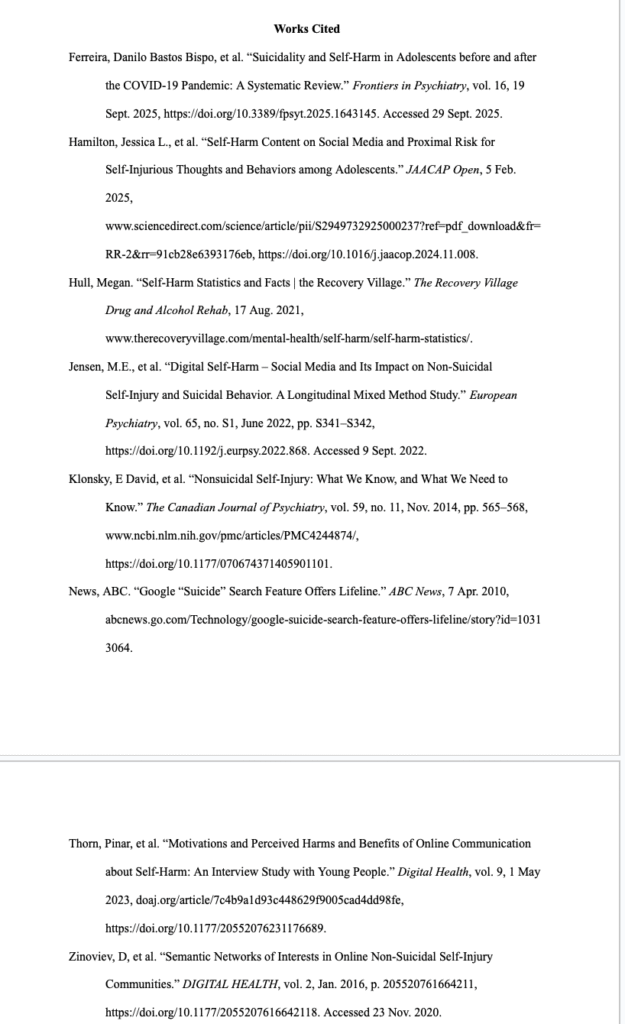
This course also helped reinforce rhetorical strategies and timed writing skills that I had previously learned in AP English. However, it pushed me to use those skills at a higher level. Another valuable lesson was learning how to properly use academic resources. The library session was especially helpful; without it, I likely would not have found the academic sources I used for my digital community essay, as many of them came from scholarly articles rather than general websites. (Here’s my works cited page for that essay)
One skill I did not gain from this course, because I already had experience with it, was adapting language to different audiences. I learned this in AP English through rhetorical analysis essays, such as analyzing former President George W. Bush’s speech after 9/11. In that speech, Bush primarily addressed the American people but also spoke directly to those responsible for the attacks. Experiences like this helped me understand how to tailor language depending on the intended audience.
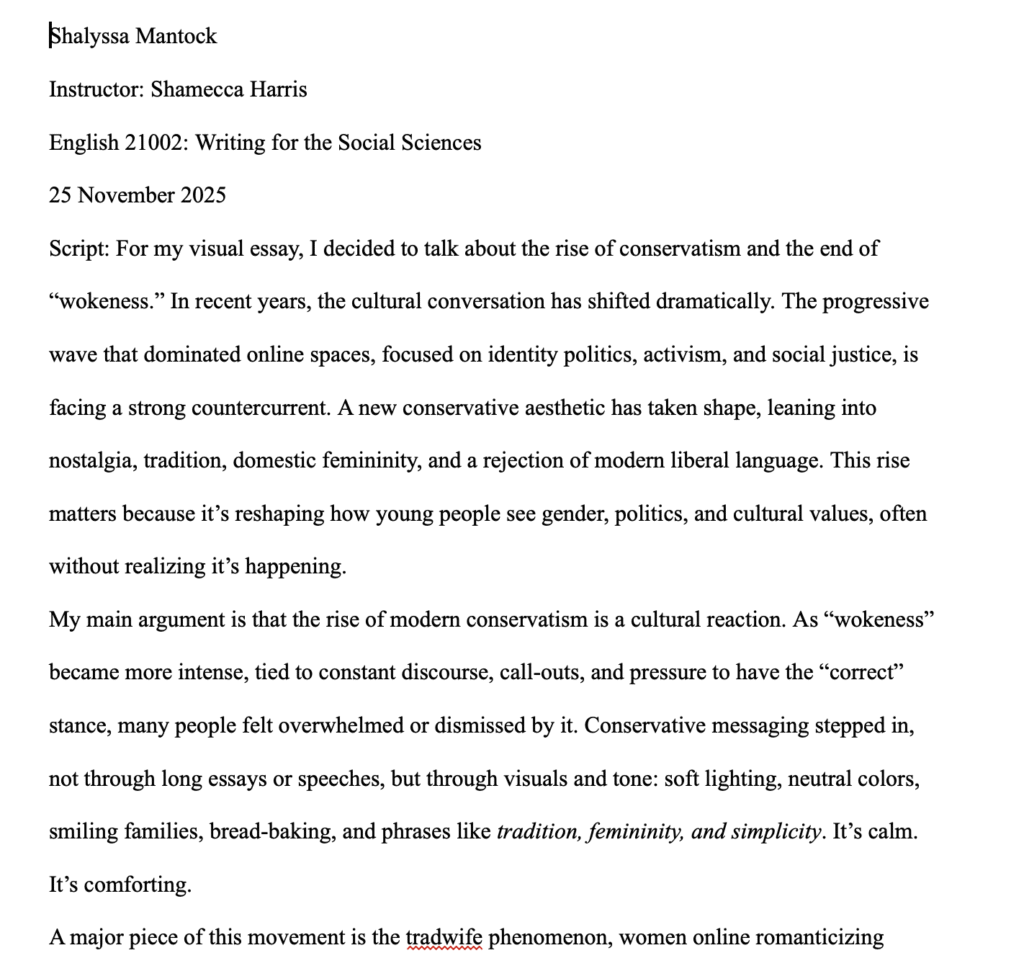
Finally, I learned two things in relation to reading and writing strategies. I realized that tools like Grammarly can be helpful, especially with comma placement, which is something I often struggle with. I also learned the value of drafting. Before this course, my first drafts often felt good enough to submit. Now, I understand that first drafts can be messy and a way to get ideas on paper. The final draft can, and should, look very different. (Here’s the first draft for my visual essay, which I changed). I went in a completely different direction with this essay and instead of me making a video and speaking, I ended up making a presentation instead.
Overall, this course challenged my assumptions about writing, strengthened my analytical skills, and better prepared me for the type of work I will continue to do as a sociology major.

